Hello friends,
I’m finding more and more that writing this blog helps me feel more intentional and connected to the mindfulness practices I am trying. If there any practices you have found particularly helpful, please feel free to comment and send them my way! I’d love to hear others’ experiences with mindfulness for chronic pain.
Last week’s post focused on beginner’s mind vs expert mind – as related to my story that pain is dangerous and most be avoided. This week, I’ve been more intentional about labeling my pain with sensory details, thus forcing myself to zoom in and stay present with it. To be honest, at times this is really hard, especially during flare ups when my mind is so programmed to get as far away from the pain as possible. Practicing this exercise in moments of below baseline pain brought me to two unexpected conclusions: 1. I am stronger and more capable than I give myself credit and 2. I am so grateful for these moments when pain does not prevent me from living my daily life and doing things that I love (highlights from this week include exploring two Columbus metro parks, jamming to music on the elliptical, and going on walks around the neighborhood)!
Trust Part 1 – Trusting Myself
The next mindfulness attitude is Trust. I wanted to break this one into two parts to give myself enough time and space to discuss trusting myself and trusting others. My journey with trusting my body has been complicated over the years by conflicting messages of “you’re healthy and fine, get over it” and “you’re deformed, different, and limited for the rest of your life.” I wanted to share with you a little of what that’s been like, and how that’s impacted trusting my body.
I shared previously that after my first spinal fusion surgery in 2008 (age 11), I healed pretty quickly, and with the transition to middle school, was eager to remove myself from my identity as “the girl in the back brace.” My friends, just children themselves, were a bit burnt out from hearing about my back, and I felt a pressured to go back to normal. Throughout my teenage years, follow-ups with my surgeon were quick, always with the same message of “looks great, come back in a year.” I was always encouraged to be more active (theatre rehearsals didn’t count apparently), but without any information about HOW to exercise with spinal fusion. So I thought, “I’m fine. This is something in the past. I don’t need to worry about it.” I found running, an exercise that I enjoyed and could do decently, and got the go-ahead from my doctor. Overtime, I felt like I had beaten scoliosis. I was an athlete, a distance runner, training for my second half-marathon. In some ways, you could say that I trusted my body to be okay. But trust requires communication, and I was putting blind faith into my body’s capacity, without actually taking any time to listen. And blind faith is not trust.
You can see how, with this attitude, I was totally blind sided in December 2020 (age 23) when after a standard 5 mile run, I was bed bound by severe back and nerve pain. But I thought I had beaten scoliosis? I thought it was no longer an issue? In the days after my injury, I scoured my brain, searching for signs I had missed that my back was in jeopardy, but I hadn’t been listening. I felt betrayed by my body for giving me this false sense of comfort and security. I felt (and still feel at times) angry at doctors for not educating me more on the risks of adjacent segment disease following long spinal fusions, particularly with high impact activities like distance running. I felt robbed of the chance to take care of my body, because no one had told me how. And now I was suffering the consequences.
Healing from my second surgery was an emotional process. I couldn’t understand how I had gone from being so strong to so weak in less than a month. I hated going to physical therapy and seeing just how broken I was. I hated my limp, the stares it brought, and the feelings of awkwardness and conspicuousness I hadn’t known since childhood. In so many ways, my body was foreign and strange to me. At first I though I could find trust in my body by pushing myself to get back to the previous version of myself. I worked hard in PT, determined to return to my running regimen. But then I was told that running would increase my chances of further decompensation of my spine and joints, and that I should avoid high impact activities all together. So then I sought trust by falling into old habits from my adolescence – restricting food, losing weight, engaging in self-destructive behaviors, giving myself some semblance of control. And finally, I just gave up. I stopped trying to take care of myself. I stopped assuming I could ever return to the fit and healthy version of me. I didn’t want to take the risk of trusting my body again.
That was until about last fall, when pain in my back, hips, and legs gradually began to worsen. Seeking support and answers, I joined a support group for adults with scoliosis and began learning about options and resources I didn’t know existed. I found a physical therapist trained in the Schroth method, a strength training program specific for scoliosis. When my original orthopedic surgeon wrote off my worsening symptoms and was unable to answer my questions about long term implications of spinal fusion, I sought a second and third opinion. CT scans confirmed failed fusion and loosening hardware. I began learning about the uncertainty of my future, but also about the options and resources I had to take care of my body.
In a lot of ways, finding out more information was scarier and brought more responsibility than ignoring the problem. Do I trust my body now? No, not entirely. But I’m taking steps to build trust. My body and mind are communicating openly and honestly, possibly for the first time. I’m learning what exercises work and don’t work for me. I’m reminding myself that not all pain is dangerous pain. I’m using meditation to check-in with myself, trying to neither dismiss nor catastrophize my fears. And it’s fucking terrifying at times, to be honest. There are times that I wish it would all just go away. I want to shut down, silence my voice, and give up. But trust requires some degree of faith – that my mind is doing the best it can, and that my body is doing the best it can, which necessitates effort and participation on both parts. I might get burned, like I did before. But if I do, I’m hoping my body and mind can be united, trusting each other to manage the fall out.
I know this post is a little bit more personal and less research-y than most, but I resonate so strongly with the theme of learning to trust my body. My practice for this week is to, in moments of self-judgement and fear, repeat the mantra: “My mind is trying the best it can. My body is trying the best it can.”
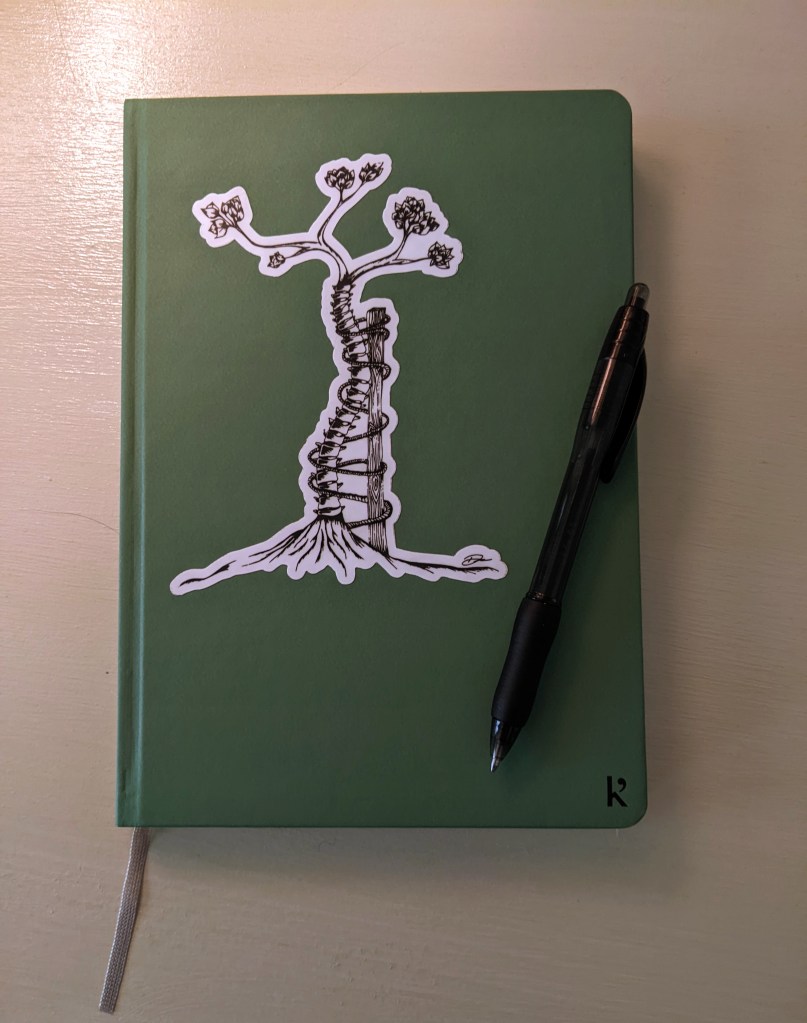
Thank you to BurlyMind Art and Things – I LOVE my scoliosis sticker! https://www.etsy.com/shop/BurlyMind


 Living Spinefully
Leave a comment